
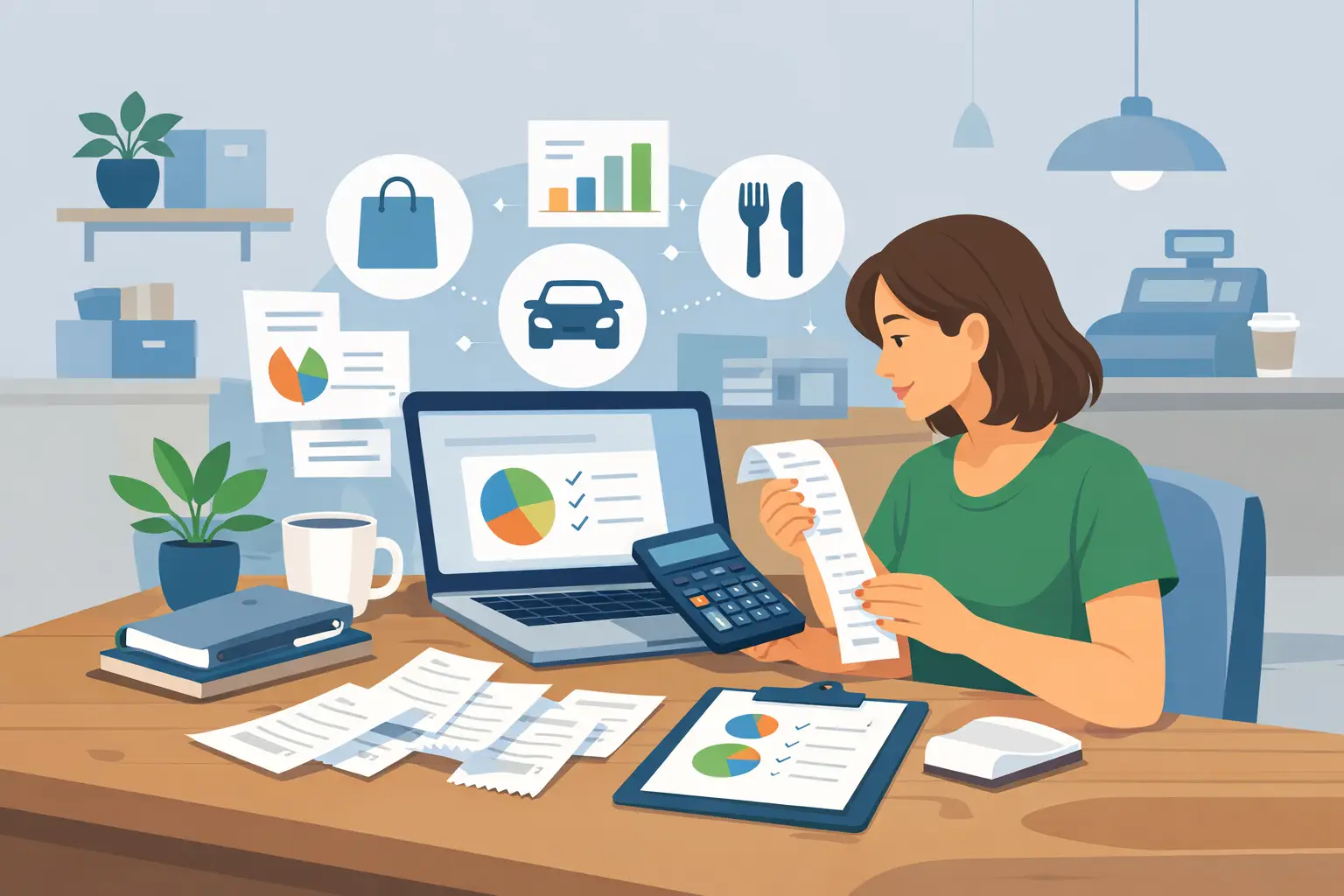
If your receipts are sitting in a glove box, a kitchen drawer, and three different email folders, you are not alone. A good small business expense categories guide helps you stop guessing where purchases belong so your records stay cleaner, your reports make more sense, and tax time feels a lot less stressful.
For most sole proprietors and very small businesses, expense categories do not need to be fancy. They just need to be consistent. When you use the same category for the same kind of purchase every time, you make it easier to track spending, spot problems, and hand cleaner numbers to your tax preparer.
Why expense categories matter
Think of categories as labeled buckets for your business spending. Instead of one long stream of transactions, you can see how much went to fuel, office supplies, advertising, repairs, or phone service. That makes your bookkeeping more useful all year, not just at tax time.
Good categories also help you catch mistakes. If a rideshare driver suddenly sees a very high amount in office expenses, that is a clue something may have been entered in the wrong place. If a landlord sees repairs rising every month, that may signal a property issue that needs attention.
The goal is not perfection. The goal is a system you can actually keep up with.
Small business expense categories guide: start with broad groups
Many beginners make the process harder by creating too many categories. You usually do not need a separate line for every tiny type of spending. Start broad, then split categories only when it helps you understand your business better.
A practical setup for many service-based businesses includes operating costs, vehicle costs, home office costs, marketing, professional services, and property-related expenses if you rent out units. Inside those groups, you can use a few common categories that fit your day-to-day spending.
Common expense categories for many small businesses
Office supplies covers basic items you use to run the business, such as printer paper, pens, postage, folders, and small desk tools. Software and subscriptions can include booking apps, design tools, cloud storage, invoicing tools, and bookkeeping software.
Phone and internet usually includes the business portion of your monthly service. Advertising and promotion covers online ads, flyers, business cards, signs, and sponsored listings. Insurance may include business liability coverage, commercial auto coverage, or errors and omissions insurance, depending on your work.
Professional fees is often used for accountants, bookkeepers, tax preparers, or business consultants. Bank fees and payment processing fees belong in their own category for many businesses because they add up quietly over time.
Meals can be tricky because not every meal is a business expense. If you are unsure what counts in your situation, it is smart to ask a tax professional. Travel may include hotels, airfare, parking, tolls, and other out-of-town business costs.
Vehicle and mileage-related categories
For real estate agents, truck drivers, rideshare drivers, cleaners, and contractors, vehicle costs are often a major part of the picture. You may track fuel, repairs and maintenance, insurance, registration, parking, tolls, and lease payments or loan interest if that applies.
Some business owners track every vehicle expense separately. Others prefer one broader vehicle expense category and rely on notes or receipt details. Either can work if your records stay organized, but detailed tracking can give you better visibility if driving is central to your business.
One note here: some people deduct actual vehicle expenses, while others use mileage methods where allowed. The right approach depends on your location and situation, so this is another area where a tax professional can help.
Home office and mixed-use expenses
If you work from home, you may have costs that are partly personal and partly business. Common examples include internet, cell phone, utilities, and home office supplies. A freelancer who uses one phone for both client calls and personal use should only record the business portion as a business expense.
This is where many people get nervous, but the basic rule is simple: be reasonable and consistent. If 60 percent of your phone use is for business, use that method regularly and keep notes on how you arrived at it. Clean documentation matters more than trying to make every number look perfect.
Expense categories by type of business
The same basic structure works for many people, but some categories matter more depending on what you do.
A real estate agent may spend heavily on marketing, signs, staging items, lockboxes, mileage, and association dues. A truck driver may have major fuel, repairs, permits, parking, meals on the road, and communication costs. A landlord may track repairs, cleaning, property management fees, insurance, mortgage interest, utilities, and supplies for each property.
Freelancers and consultants often have simpler records, with categories like software, home office, internet, education, subcontractors, and advertising. A handyman or cleaner may need categories for tools, supplies, mileage, protective gear, and small equipment repairs.
That is why a small business expense categories guide should help you think in terms of your real spending patterns, not force you into a one-size-fits-all chart.
How to choose the right number of categories
A good rule is to keep your categories detailed enough to be useful, but not so detailed that bookkeeping becomes a chore. If you only spend a few dollars a year on something, it probably does not need its own category.
For example, a freelancer does not usually need separate categories for notebooks, sticky notes, envelopes, and pens. Office supplies is enough. But a landlord may want to separate repairs from cleaning because those numbers help with property decisions.
If you are unsure, start simple and review after a few months. If one category grows large and contains many different kinds of spending, that is a sign it may be worth splitting.
Tips for keeping categories clean
The biggest bookkeeping problems usually come from inconsistency, not complexity. If one gas purchase goes under travel, the next goes under vehicle, and the next is left uncategorized, your reports stop being useful.
It helps to create a short list of your regular categories and stick with them. When the same kind of transaction comes in, assign it the same way each time. If you use bookkeeping software, recurring rules and saved categories can cut down on repeat work.
Separating business and personal spending also makes a huge difference. A dedicated business bank account and business card can save hours of sorting later. If you do pay for something business-related with a personal card, record it clearly and keep the receipt.
What to do with unusual expenses
Not every purchase fits neatly into a standard box. Maybe you bought a camera for listing photos, paid for a background check, or replaced a broken pressure washer. In those cases, ask yourself what the expense was mainly for.
If it supports promotion, advertising may be the best fit. If it helps you perform the job, supplies, equipment, or repairs may make more sense. The exact category is often less important than using a reasonable choice consistently and keeping a note if the expense is unusual.
If something feels borderline personal, do not force it into the books just because it might be related to work. That is where mistakes happen.
A simple system beats a perfect one
Many small business owners put off bookkeeping because they think they need to know all the rules before they start. You do not. You need a small set of categories, a habit of saving receipts, and a simple way to record expenses regularly.
This is also why beginner-friendly software matters. If your system is overloaded with accounting terms you do not use, it becomes easier to avoid the work. A simpler setup, like the kind Pro Ledger Online is built around, can make categorizing expenses feel manageable instead of intimidating.
Try reviewing your expenses once a week instead of letting them pile up for months. That rhythm is often enough for a sole proprietor, independent contractor, or landlord with straightforward records.
When to ask for help
Some expense decisions are easy. Others depend on tax rules, business structure, or whether an expense is partly personal. Vehicle use, home office claims, meals, equipment purchases, and property-related costs can all get more complicated depending on your situation.
When that happens, getting advice from an accountant or tax professional is worth it. A short conversation can save you from a year of messy records or a painful cleanup later.
You do not need a perfect chart of accounts to keep better books. You just need categories that match how your business actually runs, and a system simple enough that you will keep using it next week.