If your bookkeeping lives in a glove box, a spreadsheet you barely trust, or a stack of receipts waiting for “someday,” the problem usually is not laziness. It is friction. Most very small business owners do not need a full accounting system built for teams, departments, and complicated reporting. They need simple bookkeeping software that helps them stay organized, see where money is going, and keep up without turning bookkeeping into a second job.
That sounds obvious, but a lot of software still misses the mark. It offers more features than a sole proprietor will ever use, then expects that person to learn accounting terms just to record basic business activity. For freelancers, landlords, truck drivers, real estate agents, cleaners, contractors, and other owner-operators, simpler is often better – as long as the essentials are still covered.
What simple bookkeeping software should actually do
At the smallest business level, bookkeeping is about keeping clean records. You need to track money coming in, money going out, what customers still owe you, what you owe others, and how much tax-related information you need to keep straight. That is the core job.
Simple bookkeeping software should make those tasks easy to understand the first time you log in. You should not have to set up a long chart of accounts, learn double-entry accounting, or click through a maze of settings before entering your first transaction. If the software asks too much from the user upfront, many small business owners stop using it before it becomes useful.
That does not mean simple software should be bare-bones in a bad way. It still needs to handle real business needs. For a self-employed service business, that often includes income tracking, expense tracking, sales tax or input tax recording, receivables, payables, and transfers between accounts. Those are practical functions, not nice-to-haves.
Why simpler is often better for micro-businesses
Small operators usually do not fail at bookkeeping because they lack intelligence. They fall behind because the system feels harder than the work it is supposed to support. A one-person business has enough to manage already: clients, scheduling, job sites, invoices, payments, and taxes. When bookkeeping software adds complexity instead of removing it, it gets ignored.
This is where simple bookkeeping software can be a better fit than a traditional accounting platform. It cuts out features designed for larger companies and focuses on helping one person keep accurate records consistently. That trade-off matters.
Of course, simple is not automatically right for everyone. If you run payroll, manage inventory, need formal financial statements for multiple stakeholders, or have a bookkeeper handling advanced workflows, you may need a fuller accounting system. But if your business is mostly cash in, cash out, bills, customer payments, and tax tracking, simpler software may actually be the smarter choice.
The features that matter most
When evaluating bookkeeping tools, it helps to ignore flashy extras and focus on your weekly routine. Ask yourself what you need to record on a normal Tuesday, not what a software demo makes look impressive.
For most sole proprietors and very small service businesses, the right tool should let you enter income quickly, categorize expenses without confusion, and keep your accounts organized by business or property if needed. It should also make it easy to see unpaid invoices, unpaid bills, and transfers between bank or cash accounts.
Cloud access matters too. Many small business owners work from the road, at job sites, between appointments, or from home after hours. Being able to log in from anywhere is not a luxury anymore. It is part of staying current.
Security and support are easy to overlook until something goes wrong. If you are trusting software with financial records, you want to know your data is protected and backed up. And if you get stuck, you should be able to reach a real support team without feeling like your question is too basic.
Signs the software is too complicated for your business
There is a simple test: if the setup process makes you feel like you need a course before you can begin, the software may be too much for your needs.
Another warning sign is feature overload. If the platform is built around inventory management, payroll modules, department permissions, or dozens of report types you will never use, you may end up paying for complexity that slows you down. A bigger system is not always a better one.
Watch for accounting language that is not explained in plain English. Some business owners can work through that. Many would rather spend their time serving customers than translating bookkeeping jargon. That is reasonable.
The best system is usually the one you will actually keep using. Consistency beats sophistication for a very small business.
How to compare simple bookkeeping software options
Start with fit, not brand recognition. A well-known platform is not automatically the best option for a freelancer, landlord, or owner-operator. Many popular accounting tools are designed to scale upward, which sounds good until you realize you are paying for layers you do not need.
Look at how transactions are entered. Is the process direct, or does every task involve multiple steps? Check whether the software supports the basic bookkeeping activities you handle regularly. If you bill clients, review receivables. If you track vendor payments, look at payables. If you operate in a sales tax environment, make sure taxes can be recorded clearly.
It also helps to consider how the software handles separation. A landlord may want to keep properties distinct. A truck driver may need a clean record of fuel, maintenance, permits, and trip-related costs. A real estate agent may want simple visibility into commission income and business expenses. Good software does not force every small business into the same mold.
Automation can be useful, but only if it supports simplicity. Integrations with other apps can save time, especially if you already use tools for invoicing, forms, scheduling, or payment collection. The key is that automation should reduce manual work, not create another system you need to troubleshoot.
What a good fit feels like in day-to-day use
The right software usually feels calm. You log in, see what needs attention, enter transactions without second-guessing yourself, and move on with your day. That experience matters more than marketing language.
A good fit should help you answer basic questions quickly: How much came in this month? What did I spend? Which invoices are unpaid? What bills are due? Am I keeping up with my records? If the system makes those answers harder to find, it is not doing its job.
It should also lower the fear factor. Many small business owners worry they are doing bookkeeping wrong. Software built for non-accountants should reduce that anxiety by using clear labels, logical workflows, and support that meets users where they are.
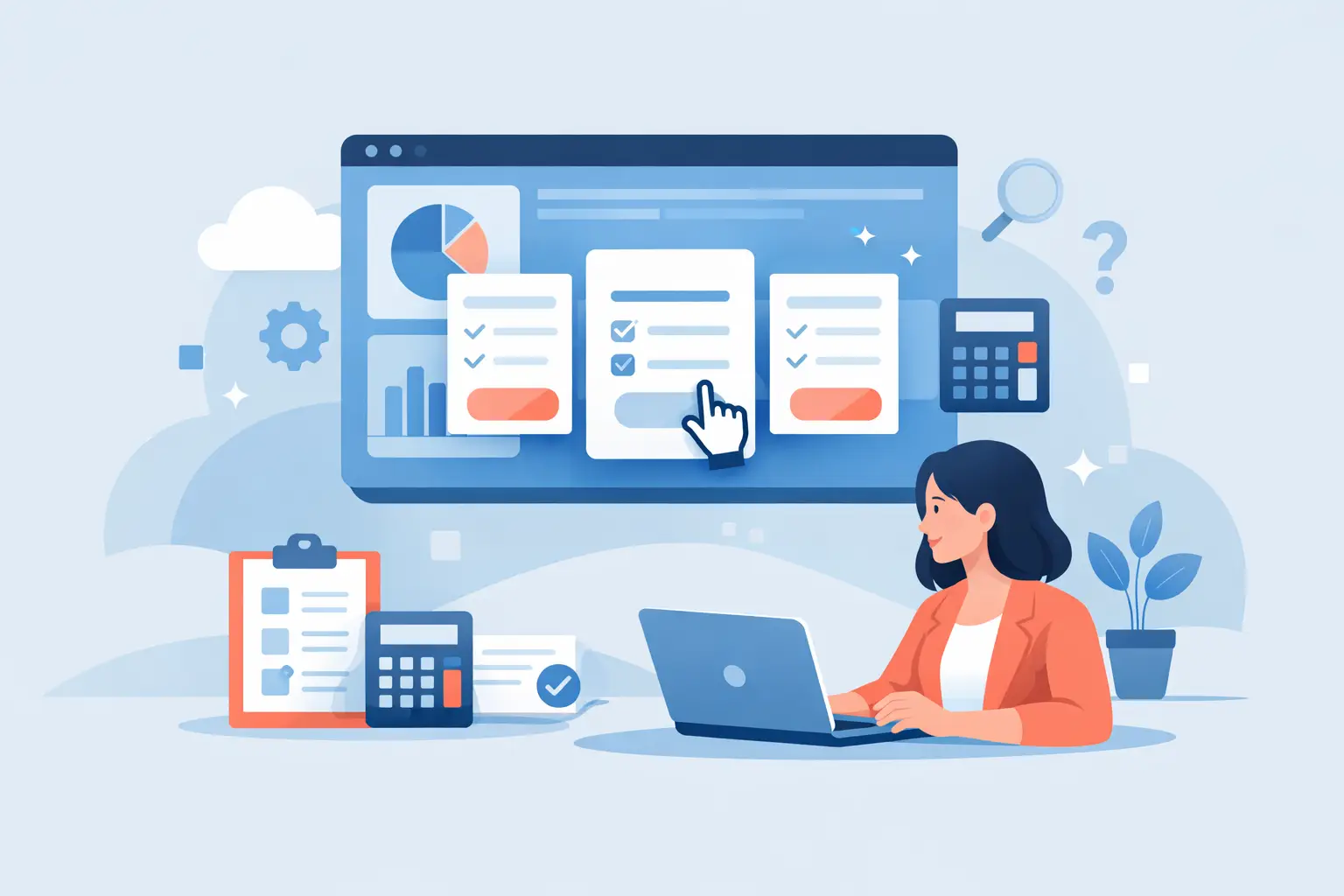
That is one reason platforms like Pro Ledger Online appeal to very small businesses. They are built around the idea that bookkeeping should be manageable for people with no formal accounting background, while still covering the practical essentials that keep records clean.
Before you commit, ask these practical questions
Can you start entering transactions right away, or does setup take hours? Can you understand the screen labels without looking up accounting terms? Can you separate income, expenses, taxes, receivables, payables, and account transfers clearly? Can you access your records anywhere and get help when you need it?
Then ask one more question that people often skip: Will this still feel usable during a busy week? Software can look fine in a demo and still become frustrating in real life. If you are tired, short on time, and trying to catch up on a month of transactions, simple bookkeeping software should help you make progress, not make you feel behind.
Price matters too, but only in context. Cheap software that wastes your time is not cheap. Expensive software with dozens of unused features is not efficient either. The better value is a tool that fits your business size, keeps your books organized, and helps you stay consistent without a steep learning curve.
For very small businesses, that is often the difference between bookkeeping that gets done and bookkeeping that gets postponed.
Choosing software does not have to be complicated. Pick the option that makes the essential work feel clear, manageable, and repeatable – because the best bookkeeping system is the one you will still be using when business gets busy.