A freelance designer finishes a project, sends the invoice, and expects payment Friday. Friday comes and goes. A week later, the invoice is still sitting unpaid while rent, fuel, supplies, or subcontractor bills keep moving forward. Learning how to manage unpaid invoices is not about being pushy. It is about giving your small business a clear, respectful process so you are not left wondering what to do next.
Most late invoices are not caused by a client trying to avoid payment. They may have missed the email, put the invoice in the wrong folder, been waiting for approval, or simply forgotten. A consistent follow-up routine solves many problems before they become uncomfortable conversations.
Start with records you can trust
Before you follow up, make sure your invoice is clear and your records are up to date. You need to know what was billed, when it was sent, the payment due date, and whether the client has already paid another way.
This matters because approaching a client about an invoice that was paid yesterday is awkward for everyone. If you are a realtor tracking commissions, a truck driver billing a load, or a landlord recording rent, check your bank account or payment app before sending a reminder.
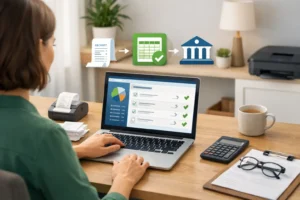
Keep a simple list of unpaid invoices with the client name, invoice number, amount, date sent, and due date. Bookkeeping software can make this easier by showing which customer payments are still outstanding in one place. The goal is not to build a complicated system. It is to avoid relying on memory or searching through old emails.
Make payment terms clear before the work begins
The easiest unpaid invoice to manage is one that has clear expectations from the start. Before beginning a job, tell the client your price, what the work includes, when you will invoice, and when payment is due.
For example, a handyman might state that payment is due within 14 days of receiving the invoice. A consultant handling a larger project may request a deposit before work begins and bill the remaining amount at completion. For recurring work, such as monthly cleaning or property management, set the billing date and payment date in advance.
Your invoice should repeat those details in plain language. Include your business name, the client name, a description of the service, the total due, the due date, and ways to pay. If you accept checks, bank transfers, card payments, or payment apps, say so clearly. Giving people an easy way to pay often gets results faster than another reminder.
Send reminders on a schedule
A reminder schedule helps you stay professional because you are following a routine, not reacting out of frustration. The exact timing depends on your business and client relationships, but a simple sequence works well for many small service businesses.
Send a friendly reminder a few days before the due date, especially for larger invoices or clients who are new to you. On the due date, send a brief note confirming that the invoice is due. If it remains unpaid, follow up about three to five business days later.
Keep the first messages short and neutral. You might write:
> Hi Jordan, just a quick reminder that invoice 1048 for $650 was due on May 10. I have attached it again for convenience. Please let me know if you have any questions or if payment has already been sent. Thank you.
This gives the client a chance to correct an honest oversight without feeling accused. Attach the invoice again, even if you sent it before. Do not make them hunt for it.
Follow up more directly when needed
If you have not heard back after the first reminder, send a second message that is still polite but more specific. Ask for a payment date rather than asking generally whether they can pay.
For example: “Could you please confirm when payment will be submitted? I would appreciate an update by Thursday.” A clear question is easier to answer than an open-ended message.
If email gets no response, try the communication method you normally use with that client. A quick phone call can be appropriate for a long-term client, a large invoice, or a time-sensitive job. Keep your tone calm: you are checking on a business payment, not starting an argument.
Ask questions before assuming the worst
An unpaid invoice can point to a simple administrative problem, but it can also reveal a concern about the work. If a client does not respond, ask whether they received the invoice and whether there is anything they need from you to process payment.
A rideshare driver working with a local business, for instance, may need to provide mileage details or a completed vendor form before the business can issue payment. An independent contractor may discover that the invoice went to the wrong person. These are fixable delays, but only if you find out about them.
If the client raises a concern about the service, listen and document what was discussed. You may need to clarify the scope of work, provide supporting information, or agree on a reasonable correction. Do not immediately discount your work just because payment is late. First understand the issue and decide what is fair based on your agreement.
Protect your cash flow while you wait
Late payments can create a real squeeze for a one-person business. You still need to pay for gas, software, materials, insurance, and everyday household expenses. That is why tracking unpaid invoices is part of managing cash flow, not just a paperwork task.
Avoid counting an invoice as money you have until it actually arrives. If you are planning purchases or setting aside money for taxes, base your decisions on payments received rather than invoices sent. This is especially helpful when income changes from month to month, as it often does for freelancers, owner-operators, and real estate agents.
For future jobs, consider whether a deposit, partial payment upfront, or shorter payment terms would reduce your risk. This depends on the type of work and what clients in your field expect. A photographer booking an event may reasonably request a deposit. A contractor buying materials may need payment for materials before starting. Explain the arrangement early so nobody is surprised.
Know when to set firmer boundaries
There is a point when friendly reminders need to become a formal request. If an invoice is significantly overdue and the client has ignored several attempts to contact them, send a final written notice. State the invoice number, amount due, original due date, and a specific deadline for payment or response.
Keep copies of your invoice, agreement, emails, texts, and notes from phone calls. Good records are useful if you need advice from an accountant, a collections professional, or an attorney. Rules around late fees, collections, and small claims differ by state and situation, so get qualified local advice before taking formal action.
You may also decide not to accept more work from a client with a pattern of late payment. That can be difficult, particularly when business is slow. Still, repeatedly chasing payment takes time and energy that could go toward reliable clients. A boundary is not unfriendly. It is part of running a sustainable business.
Prevent repeat late payments
Once an invoice is paid, take a minute to notice what happened. Did the client pay quickly after a reminder? Was the invoice sent late? Did they need a different payment method? Small patterns can help you improve your process.
Use the same invoice format each time, send invoices promptly after work is completed, and review outstanding payments at least once a week. With a simple system, you can see what is due without turning bookkeeping into a full-time job. Pro Ledger Online, for example, is designed to help small business owners track money owed to them alongside their income and expenses without needing accounting training.
A simple routine beats uncomfortable chasing
Managing unpaid invoices gets easier when you stop treating each one as a separate crisis. Send clear invoices, check what is outstanding regularly, follow up on schedule, and keep your records organized. Most clients will appreciate the clarity, and you will spend less time worrying about whether you forgot to ask for money you earned.
A steady, respectful process protects both your cash flow and your relationships. You do not need to become an accountant or a debt collector. You just need a routine that makes payment follow-up feel like a normal part of doing business.